

Last Updated: November 21, 2026
Quick Summary
Feeding comfort after birth improves most when you set up a supported station, find a position that suits your recovery, and bring baby up to you rather than leaning forward. A pillow can help raise baby to a comfortable height. Persistent pain, latch trouble or signs of infection should be checked by an IBCLC or your healthcare provider.
- Set up one reachable chair with water, snacks, burp cloths and a footstool before baby arrives.
- Choose a hold that matches your recovery, since the best position can change between week two and week six.
- Bring baby to the breast instead of leaning forward, and watch for rounded shoulders or a tilted head.
- Support your back, arms and feet so your body stays relaxed during feeds of 20 to 40 minutes.
- See an IBCLC or your provider for severe pain, fever, a red hot breast area, or latch and milk transfer problems.
Table of Contents
- 1. Set Up a Feeding Station Before Baby Arrives
- 2. Find a Supported, Comfortable Feeding Position
- 3. Bring Baby to the Breast Instead of Leaning Forward
- 4. Support Your Back, Shoulders, Arms and Feet
- 5. Use a Pillow to Support Baby and Your Body
- 6. Ease Pumping and Bottle-Feeding Discomfort
- 7. Relieve Soreness With Gentle Home Care and Know When to Get Help
- Choosing the Right Support Pillow for Your Feeding Needs
- Frequently Asked Questions
1. Set Up a Feeding Station Before Baby Arrives
Feeding sessions can run 20 to 40 minutes, sometimes many times a day, so a well-planned spot makes a real difference to your feeding comfort. Set up one chair or sofa corner you can reach easily, with a side table holding water, snacks, your phone, burp cloths, and a small light.
Keep everything within arm's reach so you don't have to stand up mid-feed. A footstool can help keep your knees slightly raised, which many parents find more comfortable. When you're ready to add support for your body and your baby, a nursing pillow guide can be a helpful next piece of the setup.
2. Find a Supported, Comfortable Feeding Position
The most comfortable position is the one that keeps your body relaxed and your baby well supported. Common options include the cradle hold, the cross-cradle hold, the football (rugby) hold, and the side-lying position. Each one suits different births, body types, and recovery needs, so it helps to think about your own body before you settle on a favorite.
Matching the hold to your recovery
A common pattern is that the hold that feels best in the first two weeks is not the one that feels best by week six. Use your recovery as a guide:
- After a C-section: Some parents with a C-section find the football hold more comfortable because it keeps baby's weight away from the incision, and side-lying may feel easier once you are comfortable lying down. Upright positions with your back supported also tend to feel better than leaning forward over a lap.
- With perineal discomfort or stitches: Side-lying or a reclined, well-supported upright position can reduce pressure on tender tissue. Sitting fully upright on a hard chair for long feeds may feel worse than a slightly reclined seat with pillows behind you.
- With back pain or limited mobility: A reclined position with your back and arms supported, and baby raised to breast height, may feel less tiring for some parents. Keep everything you need within reach so you are not twisting or standing mid-feed.
- After a premature birth or with a small baby: The cross-cradle hold gives you more control of baby's head and neck, which many parents find steadier while baby is tiny.
Upright breastfeeding positions for newborns
Upright positions keep baby's head and body aligned and can help with comfort, especially for parents who have had a C-section or who find lying down uncomfortable. Sit with your back supported, bring baby to you rather than leaning down, and let their chest face yours.
A pillow can help bring baby closer to a comfortable feeding position, which may reduce the need for you to lean forward.
If you have questions about your specific position or latch, an IBCLC or other qualified healthcare professional can offer individualized guidance. You can also review the ergonomic breastfeeding posture guide for general positioning tips.
3. Bring Baby to the Breast Instead of Leaning Forward
Leaning forward to reach your baby is one of the most common sources of neck and shoulder tension. Instead, bring your baby up to the breast. Keeping your shoulders relaxed is easier when the essentials are within reach, and MommyLoveCo can help you think through what supports a comfortable feeding setup.
Watch for signs that you're hunching: rounded shoulders, a tilted head, or tight forearms. If you notice them, pause, sit back, and readjust. A pillow can help bring baby closer for better feeding comfort, but it does not correct posture on its own.
4. Support Your Back, Shoulders, Arms and Feet
Your body needs support too. Sit with your back against the chair, your feet flat or on a footstool, and your arms resting on a pillow or armrest. Relaxed arms and a supported lower back may make feeds feel more comfortable. Our guide to relieving back pain while breastfeeding covers more targeted ways to ease discomfort.
Some parents find that taking a short break with a quick stretch during long sessions feels good. If back pain or discomfort lingers, guidance on back pain while breastfeeding offers general information, and a healthcare provider can help you decide what's right for you.
5. Use a Pillow to Support Baby and Your Body
A nursing pillow can bring your baby to a comfortable height and reduce the amount of arm and shoulder work you need to do. The Luna Lullaby® V-Shaped Nursing Pillow is designed with a V-shape rather than the traditional C-shape, offering a broad surface that adapts to different body types and feeding positions.
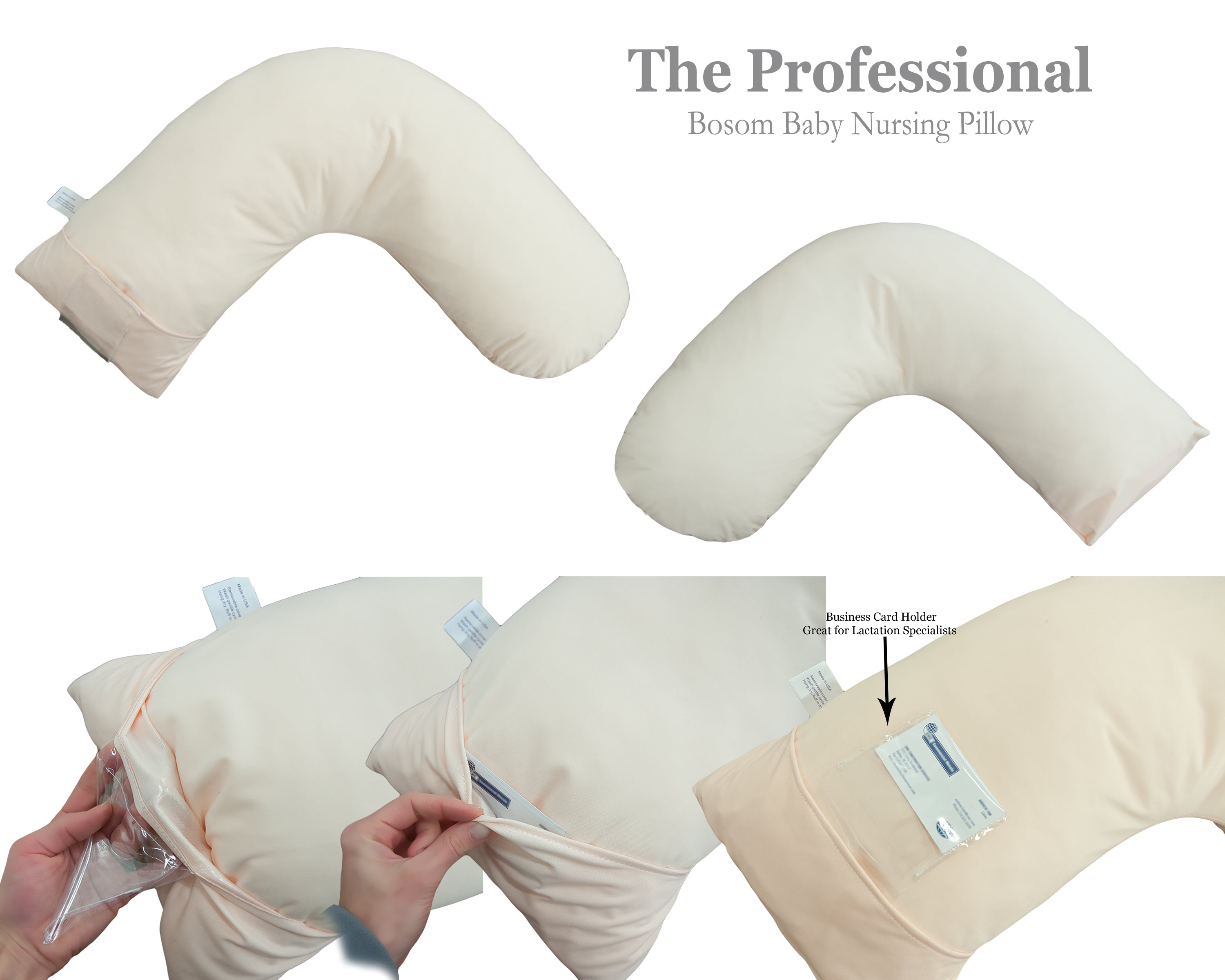
Luna Lullaby nursing pillows are filled with polyester fiberfill and are made in the USA. They are intended for awake, supervised feeding and positioning only and should not be used for infant sleep.
Explore the Luna Lullaby V-Shaped Nursing Pillow and the Luna Lullaby Travel Nursing Pillow to see which fits your routine. Additional covers can be purchased separately, so you can keep a clean one on hand.
6. Ease Pumping and Bottle-Feeding Discomfort
Pumping and bottle-feeding bring their own strain. For pumping, sit upright, keep the flange and tubing at a comfortable angle, and rest your arms on a pillow. For bottle feeding, support baby's head and body on the pillow so you aren't holding the bottle at an awkward angle for long periods.
If pumping is painful, that is worth raising with a lactation professional, since pain is not something you should simply push through. Parents combining breastfeeding with bottles often find that a consistent, supported setup in one spot makes the routine easier.
7. Relieve Soreness With Gentle Home Care and Know When to Get Help
Gentle care can ease everyday soreness, but the right response depends on what you are feeling. Use the symptom guide below to match your discomfort to a sensible next step. None of this replaces individualized guidance from an IBCLC or your healthcare provider.
Symptom-to-action guide
- Tender nipples in the first days, improving over the first week or two: This is common as feeding gets established. Keep nipples clean and dry between feeds, express a little breast milk onto the nipple and let it air-dry, and ask your provider whether a lanolin product is right for you. Check that baby is taking a deep mouthful of breast rather than just the nipple tip.
- Nipple pain that is sharp, lasts the whole feed, or gets worse instead of better: Pain that persists past the first week or two, or that comes with cracking, blistering, or bleeding, is worth raising with an IBCLC. It can sometimes relate to latch or positioning, which an IBCLC can assess.
- Engorgement (hard, swollen, painful breasts): Feed frequently, and try a warm compress or a warm shower just before a feed to help milk flow. A cool compress between feeds may ease swelling. Some parents find that gentle hand expression to soften the areola makes latching easier, and an IBCLC can show you how.
- A hard, painful lump or a red, warm area on the breast: Keep feeding on that side, but contact your provider promptly. A lump with redness, warmth, or fever needs medical assessment rather than home care alone.
- Nipple damage with white, blanched nipples after feeds: This can relate to positioning, latch, or blood flow. Mention it to your provider or an IBCLC rather than pushing through.
- Pain from positioning rather than the breast itself (neck, shoulders, wrists, back): Revisit your setup. Bring baby to you instead of leaning forward, support your arms, and put your feet on a footstool. If pain lingers, your healthcare provider can help you decide what is right for you.
When to call rather than wait
Contact your doctor, midwife, or an IBCLC promptly if you have severe or persistent pain, a fever, a red or hot area on the breast, flu-like symptoms, nipple damage that is not healing, or trouble with latch or milk transfer. These signs deserve individualized care, and getting help early usually makes the fix simpler.
For specific concerns, individualized care matters more than general tips. A lactation professional can watch a full feed and offer individualized guidance on position, latch, and setup.
Use this guide to match your discomfort to a sensible next step.
| Symptom | Likely cause | Next step |
|---|---|---|
| Tender nipples in first days, improving over 1-2 weeks | Common as feeding gets established | Keep nipples clean and dry; express a little milk and air-dry; check deep latch |
| Sharp nipple pain lasting whole feed or worsening | Possible latch or positioning issue | Raise with an IBCLC |
| Hard, swollen, painful breasts | Engorgement | Feed frequently; warm compress before feeds; cool compress between feeds |
| Hard, painful lump with redness, warmth or fever | Possible infection | Contact your provider promptly |
| White, blanched nipples after feeds | Related to positioning, latch or blood flow | Mention to provider or IBCLC |
| Pain in neck, shoulders, wrists or back | Positioning | Bring baby to you; support arms; use a footstool; see provider if pain lingers |
Choosing the Right Support Pillow for Your Feeding Needs
When comparing options, look at shape, fill, cover care, and how the pillow fits your body and your baby's age. A V-shaped design such as the Luna Lullaby® V-Shaped Nursing Pillow offers flexible positioning for breastfeeding and bottle feeding, and its covers are machine washable. Luna's pillows are made in the USA and have been trusted by families for more than 20 years.
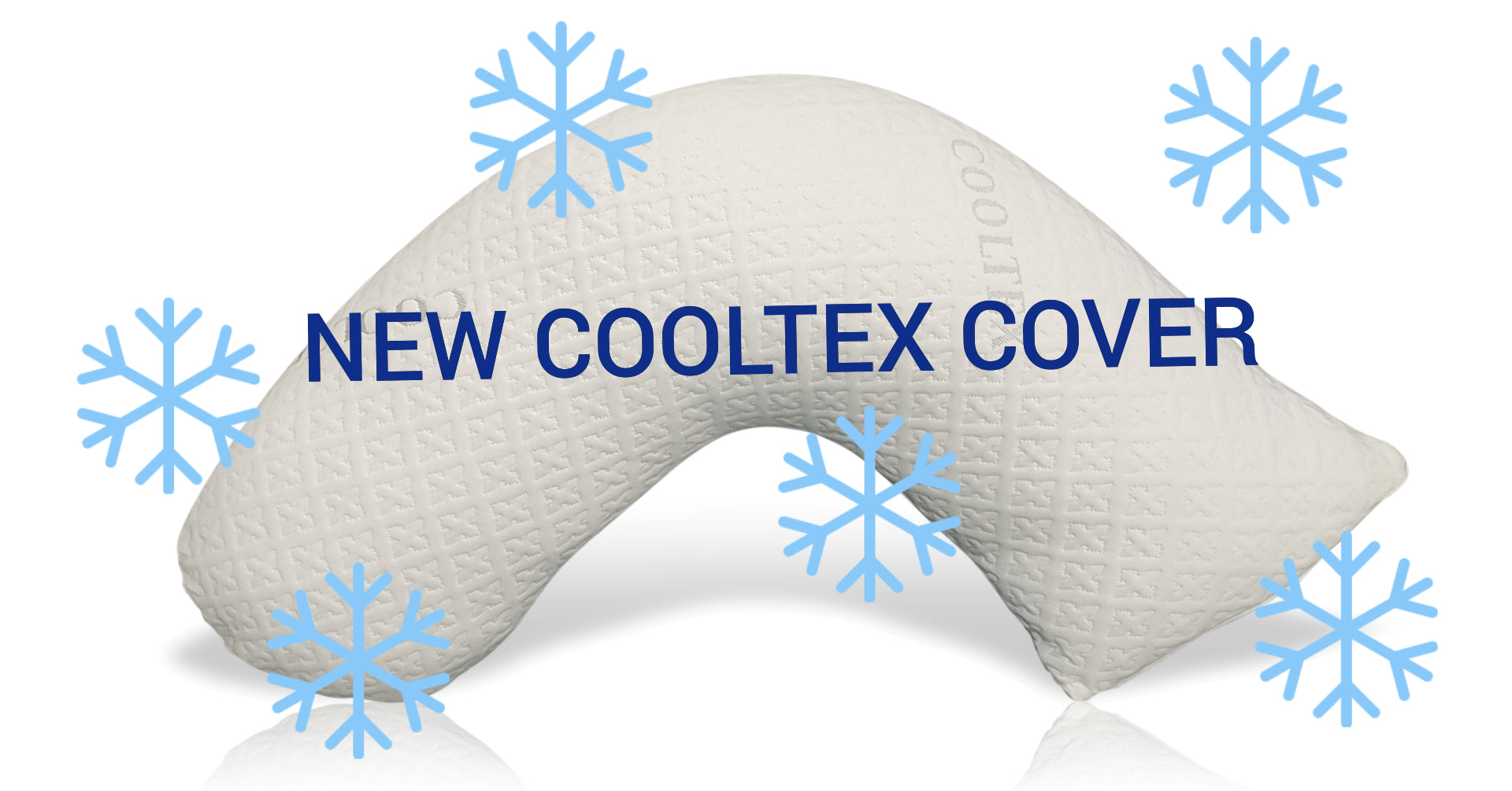
For a supportive setup you can take anywhere, the Luna Lullaby Travel Nursing Pillow is a compact option, and the Luna Lullaby Nursing Pillow Covers let you keep things fresh.
Frequently Asked Questions
Which breastfeeding positions can help make feeding more comfortable?
Several positions can make feeding easier, including the cross-cradle hold, the football hold, the side-lying position and laid-back nursing. The right choice depends on your recovery, whether you had a cesarean birth, and how your baby latches. The cross-cradle hold gives good control for newborns, while the football hold keeps baby off a sore abdomen. Try each position with pillows behind your back and under your arm, and switch sides or positions across feeds to vary pressure on your body. If one position causes sharp pain, stop and ask an IBCLC or your healthcare provider for individualized guidance.
How can a nursing pillow support a comfortable feeding position?
A nursing pillow can bring your baby up to breast height so you do not have to lean forward or hold your arms in one tense position for long periods. Luna Lullaby's V-shaped design offers a broad supportive surface and allows flexible positioning for different body types and feeding positions. The pillow may help you keep your shoulders relaxed and your baby closer to a comfortable feeding angle. It is designed for awake, supervised feeding and positioning only, and it is not a sleep product.
Can I use a nursing pillow for bottle-feeding?
Yes. Many caregivers use a nursing pillow for bottle-feeding because it can help hold baby at a supported angle, which can make the feed more comfortable for both of you. Luna Lullaby nursing pillows may be used for supervised breastfeeding and bottle-feeding support. Always keep feeds supervised and never leave a baby alone with a bottle.
When should I ask a lactation consultant for help?
Ask for help if feeding is painful, if your nipples are cracked or bleeding, if your baby seems unable to latch or feed effectively, or if you are worried about your baby's weight gain or output. An International Board Certified Lactation Consultant (IBCLC) can assess latch, positioning and feeding patterns in person or by video. Your pediatrician and obstetric provider can also check for medical causes of pain or feeding difficulty. Early support often makes feeding more comfortable and helps prevent problems from becoming harder to fix.