
Last Updated: October 31, 2026
Quick Summary
To breastfeed comfortably with large breasts, position your baby to the breast rather than the breast to the baby, lifting the breast with a C-hold so your nipple lines up with your baby's nose. Support the breast from underneath with your whole hand behind the areola, and aim for a deep, chin-first latch.
- Try the football, side-lying, and cross-cradle holds in the first week, since your body and your baby's latch will change.
- Cup your breast in a C shape with fingers underneath and thumb on top, well back from the areola.
- A rolled towel, folded cloth, or light scarf looped under the breast can hold the lift during long feeds.
- Aim the nipple at your baby's nose and support the base of the skull so the chin can drop and lead.
- If a latch feels pinched, break suction gently with a clean finger and start the sequence again.
Table of Contents
- Why Large Breasts Change the Feeding Setup
- Breastfeeding Positions for Large Breasts That Actually Work
- How to Support Your Breast While Breastfeeding
- Breastfeeding Latch Tips for a Deeper, More Comfortable Latch
- Choosing a Nursing Pillow for Large Breasts
- Troubleshooting Pain, Nipple Damage, and Latch Setbacks
- Finding Skilled Lactation Support
- Frequently Asked Questions
Why Large Breasts Change the Feeding Setup
Learning how to breastfeed comfortably with large breasts starts with one honest fact: the standard holds you see everywhere were not built around your body, so the goal is to breastfeed comfortably on your own terms.
Breast size and shape also change daily. Fullness in the early weeks, engorgement, and shifts in tissue firmness all affect where your nipple points and how much room your baby has for a deep latch.
Your two best tools are simple: good support under the breast and good support under your arms. Below, we walk through the holds that work, the latch checks that matter, and how to troubleshoot when feeding gets sore.
Breastfeeding Positions for Large Breasts That Actually Work
The best breastfeeding positions for large breasts give you a clear view of your baby's mouth and keep your hands free to shape and support the breast. For a deeper visual guide, see our breastfeeding support positions article. Three holds do this well: football, side-lying, and cross-cradle. Try all three in the first week, because your body and your baby's latch will change.
Football or Clutch Hold
The football hold, also called the clutch hold, tucks your baby under your arm at your side, facing your breast with feet pointing back toward your shoulder. It can suit a large bust because your hand controls the breast from above while your forearm supports your baby's back, and you can see the latch directly. Use a firm pillow behind your back and another under the arm holding your baby.
Side-Lying Position
Side-lying lets you feed lying down, which many parents rely on during nighttime feeds and postpartum recovery. Lie on your side with your baby on their side facing you, nose level with your nipple. Pull your baby close rather than twisting toward them. A rolled towel or small pillow behind your baby's back can stop them from rolling away. This position takes practice, so set it up while you are wide awake before using it at night.
Cross-Cradle Hold
The cross-cradle hold uses the arm opposite the breast to support your baby's head and neck. Your hand holds the base of the skull, and your other hand supports and shapes the breast.
How to Support Your Breast While Breastfeeding
Knowing how to support breast while breastfeeding is the single most useful skill for a larger bust. Use a C-hold: cup your breast with your hand in a C shape, fingers underneath and thumb on top, well back from the areola.
Here is the setup that works:
- Lift from underneath. Slide your whole hand under the breast and raise the tissue to take the weight off.
- Keep fingers off the areola. Your hand should sit behind the dark area so your baby has room to latch deep.
- Use a rolled towel or muslin cloth. Tuck a rolled towel or folded cloth under the breast to hold the lift when your arm gets tired.
- Try a scarf sling. A light scarf looped under the breast can take the weight for long feeds.
- Shape as needed. Gently compress the breast into a sandwich shape if your baby struggles to get a mouthful.
A supportive nursing bra matters here too. Look for one with a wide band and adjustable cups that hold the breast without pressing it flat.
Breastfeeding Latch Tips for a Deeper, More Comfortable Latch
With a large bust, the latch is where most comfort is won or lost. Extra breast tissue can sit high on the chest, so your nipple may point downward or outward rather than straight ahead, and your baby's nose can end up pressed into the breast before the chin has a chance to lead. The goal is a deep, asymmetric latch: chin first, nose clear, and a mouthful of breast tissue, not just the nipple.
Why a large bust tends to produce a shallow latch
A shallow latch usually happens for one of three mechanical reasons, and naming them makes them easier to fix:
- The nipple points down. Gravity pulls full, heavy tissue low, so your baby approaches from below and grabs the tip instead of the base.
- The breast blocks the nose. When the breast is full and firm, it can rest against your baby's nose, and your baby pulls back to breathe, which slides the latch shallow.
- The head is not free to tilt. If your baby's chin is tucked toward the chest, the jaw cannot drop wide, and the mouth closes on the nipple instead of the areola.
Each of these has a positioning fix, which is why the latch check below is a sequence rather than a single tip.
The step-by-step latch and airway check
Run this in order at the start of a feed. It takes about 30 seconds once you have practiced it.
- Set your body first. Sit or lie with your back supported, shoulders relaxed, and your baby at breast level, not below it. A supportive pillow under your arms and a lift under the breast can help bring baby closer to a comfortable feeding position, which may reduce the need for you to lean forward.
- Lift and aim the breast. Cup the breast from underneath with your whole hand behind the areola and raise the tissue so the nipple lines up with your baby's nose, not their mouth. Aiming at the nose encourages the head to tilt back.
- Let the head tilt back. Support the base of the skull, not the back of the head, so your baby's chin can drop and lead.
- Tease the wide gape. Brush the nipple lightly against the upper lip and wait for a wide, yawning open, mouth open like a big yawn, tongue down.
- Bring baby on, chin first. Move your baby onto the breast quickly, aiming the chin toward the underside of the breast and the nipple toward the roof of the mouth. Do not push the breast into the mouth; bring the baby to the breast.
- Check the seal. Lips should be flanged outward, more areola visible above the top lip than below the bottom lip, and cheeks full and rounded rather than dimpled or hollowed.
- Check the airway. Your baby's nose should be clear or just barely touching the breast. If tissue is covering the nose, tuck the hips closer and lift the breast slightly, do not pull the breast away, which drags the latch shallow.
- Listen and feel. You should hear rhythmic swallowing, not clicking or smacking. You should feel a strong tug, not a sharp pinch.
Breast shaping and compression during latch
If your baby struggles to get a mouthful of a full, firm breast, gently compress the breast into a sandwich shape, fingers on one side, thumb on the other, well back from the areola, and hold that shape while your baby latches. Release the compression once the latch is deep and swallowing is steady. This is sometimes called breast shaping, and it is especially useful in the first weeks when fullness makes the breast harder to grab.
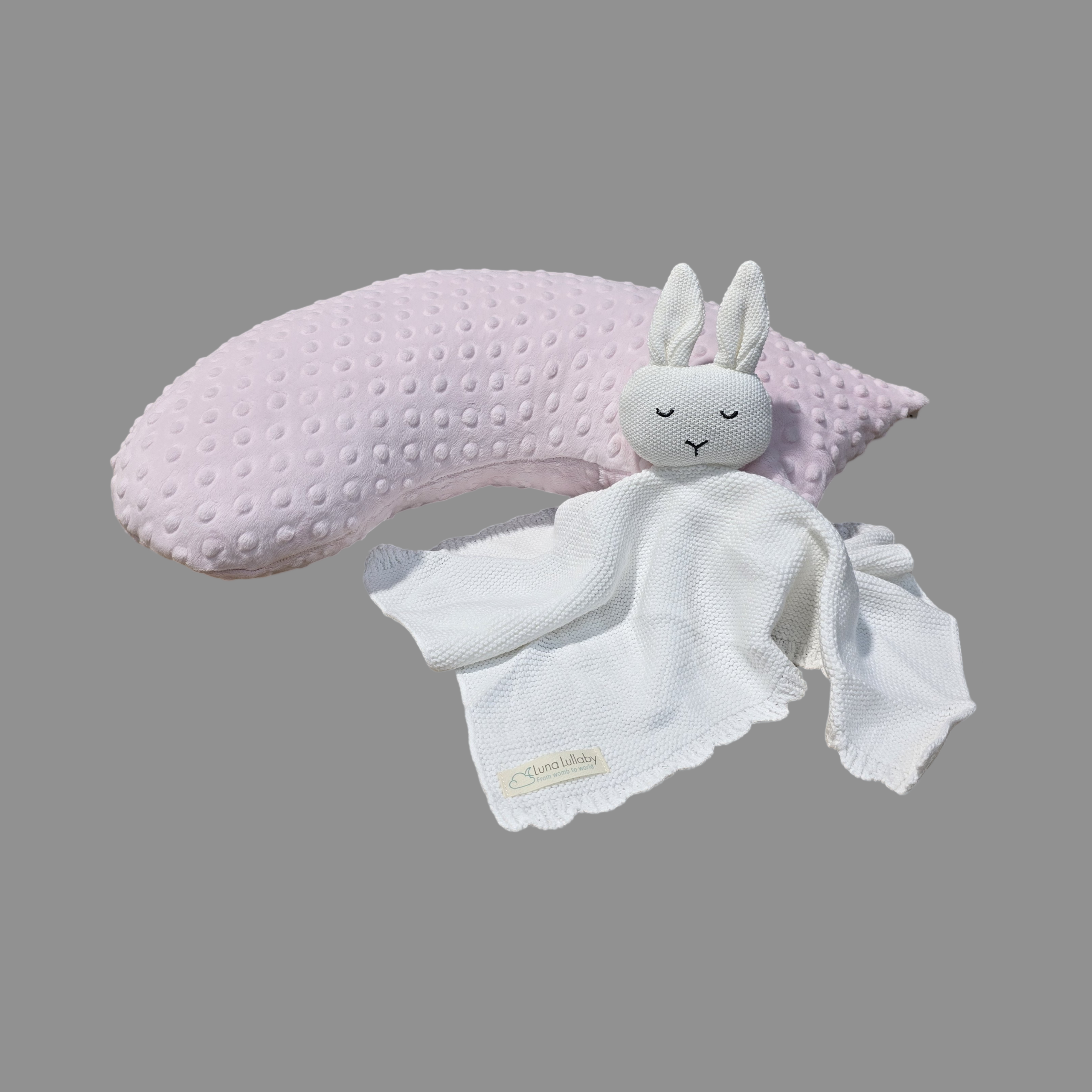
Luna Lullaby® V-Shaped Nursing Pillow | Milk Mamma Bottle Design →
When the latch keeps sliding shallow
If you correct the latch and it slides shallow again within a minute or two, the cause is usually positioning rather than technique. Try a different hold, the football hold gives you a clear view of the chin, and the cross-cradle hold frees both hands to shape and support. For a fuller walkthrough, see our guide on how to improve breastfeeding latch with positioning and support.
Choosing a Nursing Pillow for Large Breasts
A nursing pillow can help bring your baby up to your breast, which may reduce how often you need to lean forward during feeds.
| Pillow Feature | Why It Matters With a Large Bust | What to Check |
|---|---|---|
| Shape | A V-shape leaves room for the breast while lifting baby | Fits your torso without pressing the bust |
| Firmness | Soft fill collapses under weight | Holds baby at breast level all feed |
| Surface width | Supports different holds | Wide enough for football and cross-cradle |
| Cover | Milk and spit-up happen | Removable and machine washable |
| Positioning | Reduces the need to lean forward | Baby sits at breast height, not below |
The Luna Lullaby nursing pillow takes a different approach from the traditional C-shape. To see how the shape works for different bodies, read our guide to V-shaped nursing pillow benefits, or browse the full Luna Lullaby nursing pillow collection to compare designs and covers.
Troubleshooting Pain, Nipple Damage, and Latch Setbacks
Persistent pain is a signal, not a personality flaw. Soreness in the first few days is common as your body adjusts, but sharp pain, cracking, or bleeding usually points to a shallow latch, poor positioning, or a breast that is too full and firm for your baby to grab. The useful question is not "is this normal?" but "what is the mechanism, and what do I change first?"
Match the symptom to the likely cause
| What you notice | Likely mechanism | First thing to try |
|---|---|---|
| Pinching at the start of a feed | Shallow latch, nipple-only grab | Re-latch with chin-first sequence |
| Pain that builds through the feed | Baby sliding shallow as the breast softens | Reposition and re-latch mid-feed |
| Cracked or blistered nipple | Friction from a shallow latch over several feeds | Fix the latch, then protect the nipple |
| Baby pulling back and fussing | Nose blocked by breast tissue | Tuck hips closer, lift the breast slightly |
| Hard, tight breast baby cannot grab | Engorgement or fullness | Soften the areola before latching |
Managing engorgement and fullness while positioning
When your breast is very full, the areola can become firm and flat, and your baby cannot draw enough tissue into the mouth, so the latch goes shallow no matter how well you position. The fix is to soften before you latch, not to force the latch.
- Hand-express a little milk first. Gently express just enough to soften the areola so it compresses like a lip, not a drum.
- Try reverse pressure softening. Apply gentle, steady pressure around the base of the nipple with your fingertips for about a minute to push fluid back and soften the area.
- Feed on the fuller side first if one breast is noticeably more engorged, since a hungry baby draws more effectively at the start of a feed.
How breast shape and baby size change the plan
Breast size is only one variable. Shape, nipple direction, tissue firmness, and your baby's size and mouth all interact, which is why one recommended hold rarely fits every feed.
- Nipple direction matters more than cup size. A nipple that points downward may need a hold that approaches from below; a nipple that points outward may suit a cradle or cross-cradle hold better.
- Firm tissue vs. soft tissue. Firmer tissue holds its shape and may need less hand support; softer tissue may need more lifting and shaping.
- A small baby or a premature baby may need more head support and a hold that keeps the chin free, since a smaller mouth has less room to draw in a large areola.
Treat each feed as a small experiment: change one variable at a time, hold, breast lift, or latch timing, and notice what changes.
When discomfort may signal a problem
Most early soreness improves as the latch improves. Reach out to a doctor or an IBCLC if you notice:
- Pain that continues past the first few days or gets worse rather than better
- Cracked, bleeding, or blistered nipples that do not heal with latch correction
- A hard, red, painful area on the breast with fever or flu-like symptoms
A good consultant will watch a full feed and adjust your setup, not just your technique. Our article on breastfeeding latch pain and when to see a doctor explains the signs that mean it is time to call.
Finding Skilled Lactation Support
An IBCLC, or International Board Certified Lactation Consultant, is the gold standard for hands-on feeding help. Ask your hospital, pediatrician, or local lactation group for a referral, and request someone who can watch a full feed and check the latch in person.
Bring specifics to the visit: which holds you have tried, when pain happens, and how long feeds last. If you are building a setup that travels with you, to appointments, to family, or between rooms, a portable option like the Luna Lullaby Travel Nursing Pillow can make it easier to keep baby at a comfortable feeding height away from home, and the washable Travel Nursing Pillow Covers are handy for inevitable spit-up on the go.
Frequently Asked Questions
What is the best breastfeeding position for large breasts?
There is no single best position, but many parents with large breasts find the football or clutch hold and side-lying position easiest to manage because they keep the breast tissue from pressing on baby's nose. The cross-cradle hold also works well when you can support the breast with your hand. Try a few holds and notice which one keeps your baby's chin pressed into the breast, nose clear, and your own shoulders relaxed. A supportive pillow that brings baby to breast level can make any of these positions more comfortable.
How do I support my breast while breastfeeding?
Cup the breast from underneath with your four fingers, keeping your hand well behind the areola so baby can get a deep latch. Use a C-hold or U-hold depending on which gives you better control. A rolled muslin cloth or rolled towel tucked beneath the breast can lift heavy tissue and hold it in place so your hand does not tire. Breast shaping, gently compressing the breast to match baby's mouth, can also help. If support feels awkward or painful, an IBCLC can show you hand placements that fit your body.
Should I use a nursing pillow if I have large breasts?
A nursing pillow can help by raising baby to breast level, which may reduce the need for you to lean forward or hunch over during feeds. For parents with large breasts, a pillow with a broad, supportive surface and flexible positioning tends to work well. Luna Lullaby's V-shaped nursing pillow is designed to support different body types and feeding positions for supervised breastfeeding and bottle-feeding. Pair the pillow with hand support or a rolled cloth under the breast for the most comfortable setup.
When should I get help with breastfeeding pain or latch problems?
Reach out to an IBCLC or your healthcare provider if pain lasts beyond the first few seconds of latch, if nipples are cracked or bleeding, if baby is not gaining weight, or if feeding sessions consistently feel difficult. Early support often prevents small issues from becoming bigger ones. A lactation consultant can watch a full feed, check latch and airway, and suggest positioning changes specific to your breast size and shape. You do not need to wait until things feel unmanageable to ask for help.
Feeding comfortably with a larger bust is a matter of support, positioning, and patience, and it rarely clicks on the first try. If you want a pillow built for flexible positioning across body types, Luna Lullaby's V-shaped nursing pillow offers a broad surface, Made-in-USA construction, and machine-washable covers for breastfeeding and bottle-feeding support. Get started with Luna Lullaby and build a feeding setup that works for your body.