

Last Updated: November 17, 2026
Quick Summary
A feeding support setup is the arrangement of the chair, table height, supplies and positioning that makes feeding a person with limited mobility safer and less strenuous for both of you. Start by checking seating, reach and posture, then change one thing at a time. Caregivers often focus on the food and overlook the setup itself.
- Choose a firm chair with armrests and flat-footed support so standing up is safer.
- Set bowl, cup, utensils and napkin within easy reach before the meal starts.
- Keep the person upright with back support while eating, and never leave them alone if swallowing is hard.
- Match each adaptive device to one specific problem you observe during a meal.
- Stop and contact a healthcare professional if coughing, choking or breathing difficulty happens.
Table of Contents
- Why the Setup Matters as Much as the Meal
- Step-by-Step Feeding Support Setup for Limited Mobility
- Safe Positioning During Meals for Both Of You
- Choosing Adaptive Eating Equipment and Assistive Devices
- Caregiver Feeding Techniques That Protect Your Energy
- When Someone Won't Eat or Has Trouble Swallowing
- Your Next Step: Building a Setup That Fits Your Home
- Frequently Asked Questions
Why the Setup Matters as Much as the Meal
A good feeding support setup makes feeding a person who cannot move easily less hard work for both people. The caregiver often bends, reaches, lifts and waits.
Many caregivers focus on the food and forget the setup. That is a common mistake.
The steps below walk through a practical setup. Use what fits your home and your situation, and skip what does not.
Step-by-Step Feeding Support Setup for Limited Mobility
Start with the basics before you buy anything. Look at the room where meals usually happen. Note the chair, the table height, the lighting and the walking path. Then make changes one at a time so you can see what helps.
- Clear a path from the kitchen to the eating area
- Remove loose rugs and cords that could catch a foot or wheel
- Make sure there is good light on the person's face and the food
Choosing the Right Seating and Surface Height
The chair matters more than most people expect. A chair that is too low makes getting up hard for both of you. A chair without arms can make standing up unsafe for a person with weak legs.
Look for these features in a seat:
- A firm seat that does not slide
- Armrests for pushing up from the chair
- A back that keeps the person upright
Table height also affects your posture. If you must lean over a high table, your back and shoulders will pay for it. Many caregivers find that raising the person's seat, or lowering the surface, puts the food at a more comfortable level for both.
Arranging Supplies Within Easy Reach
Set everything up before the meal starts. Each trip to the kitchen means standing, walking and bending again. Put these items on the table or a tray beside you:
- Bowl, plate, cup and utensils
- A napkin or bib
- A small cup of water
Keep frequently used items between waist and shoulder height. Store heavy pots and dishes at a level you can reach without bending deep. A rolling cart can carry supplies from the kitchen in one trip.
Safe Positioning During Meals for Both Of You
Safe positioning protects the person eating and the person helping. The person should sit upright, with the back supported and the head level or slightly forward. Avoid lying flat or leaning far back while eating.
Keep your own body steady as well:
- Sit or stand close to the person, not stretched across the table
- Keep your back straight and your feet planted
- Use a bent-knee stance if you must stand for a long time
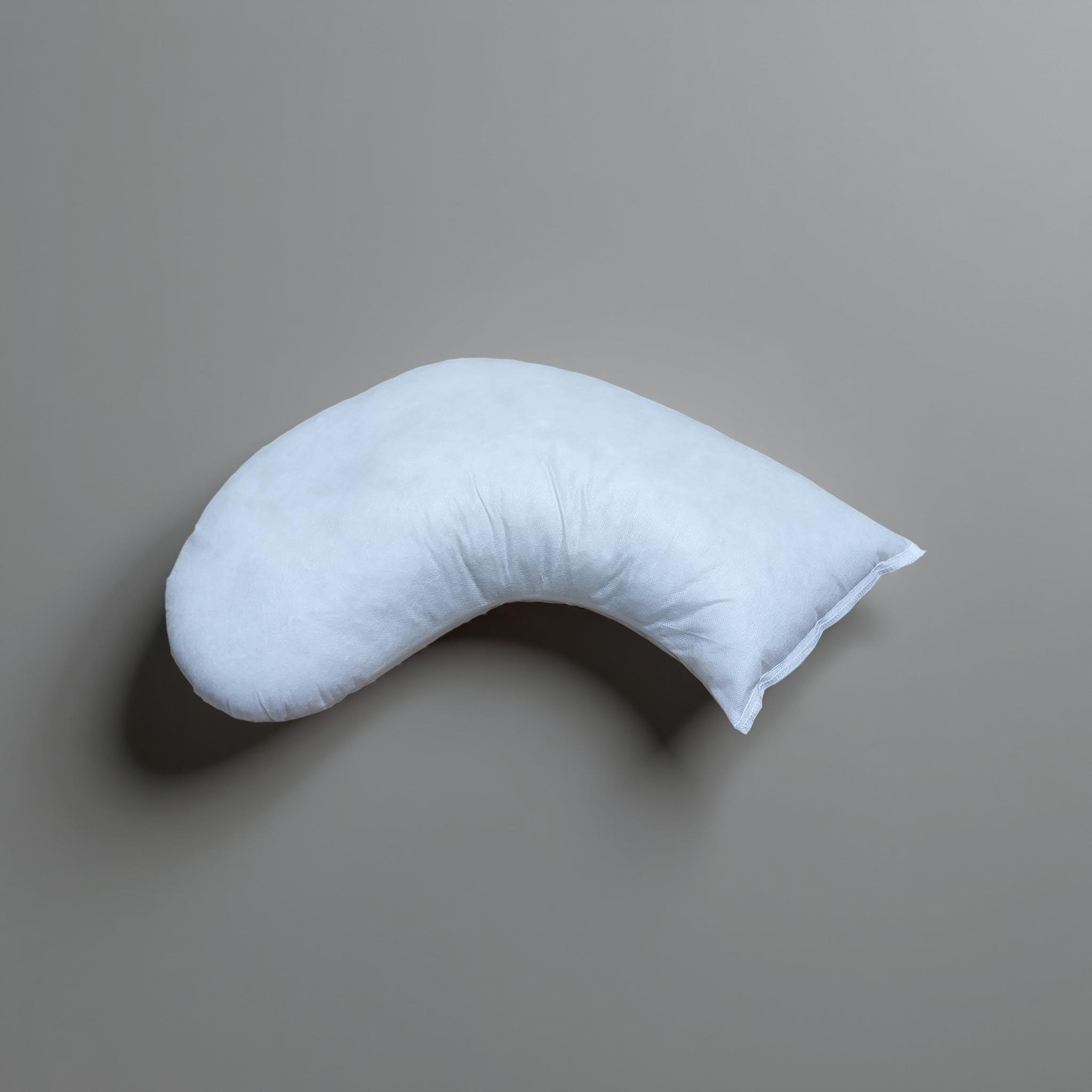
Feeding support pillows can help bring the person and the food into a comfortable range, which may reduce how far you need to lean. The Luna Lullaby V-Shaped Nursing Pillow is designed to support positioning during supervised feeding, though it does not replace a proper seat or a safe posture.
Never leave someone alone while they are eating if they have trouble swallowing or sitting upright. Stop and call a healthcare professional if coughing, choking or breathing difficulty happens.
Choosing Adaptive Eating Equipment and Assistive Devices
Adaptive equipment is not about buying the most gadgets. It is about closing the specific gap between what the person can do and what the meal requires, and doing it in a way that also protects your own body. The right two or three items often outperform a drawer full of tools nobody uses.
Start With a Task Breakdown, Not a Shopping List
Before you buy anything, watch one full meal and note where it breaks down. Common failure points:
- Food slides off the plate before it reaches the mouth
- The plate or bowl slides across the table when pushed
- The hand cannot close around a standard handle
Each failure point maps to a different device category. Matching the tool to the observed problem is what keeps the setup useful instead of cluttered.
A Decision Guide for Common Devices
Plate guards and lipped plates. These help when food is being pushed off the edge during scooping.
Non-slip mats and suction bases. These help when the plate or bowl slides.
Built-up and weighted handles. Built-up handles help when grip strength or hand closure is limited, because a larger diameter is easier to hold.
Cups with lids, spouts, or two handles. These help when tilting a full cup is difficult or spills are frequent. Two-handled cups let the person use both hands for stability. Lidded cups reduce spill volume but add a step to cleaning.
Adapted cutlery angles. Angled spoons and forks help when the wrist cannot rotate comfortably.
Three Questions to Ask Before You Buy
- Does it fit this person's grip and posture today? A device that requires a motion the person cannot make will sit unused.
- Can you clean and set it up without extra strain? Dishwasher-safe and few-piece items are easier on a caregiver with limited mobility.
- Will it still work on a tired day? The best device is the one that helps on the worst day, not just the best one.
Where to Find Equipment and How to Try It
If the person receives care through a home health agency, ask whether an occupational therapist can do a seating and equipment review, that assessment is typically the most reliable guide to what will actually help.
If grip, swallowing, or positioning concerns are significant, raise them with the person's healthcare team before purchasing. An occupational therapist or speech-language pathologist can recommend specific devices for that individual rather than a generic list.
Matching a device to the specific problem you observe during a meal keeps the setup useful rather than cluttered.
| Observed problem | Device category | Best for |
|---|---|---|
| Food slides off the plate | Plate guards and lipped plates | Scooping rather than finger foods |
| Plate or bowl slides across the table | Non-slip mats and suction bases | Smooth or textured tables, after checking grip |
| Hand cannot close around a standard handle | Built-up handles | Limited grip strength or hand closure |
| Hand shakes or is unsteady | Weighted handles | Tremor or unsteadiness |
| Liquid spills when the cup tilts | Cups with lids, spouts, or two handles | Frequent spills or difficulty tilting |
| Person cannot reach a standard table | Lap trays and stable tray tables | Adjustable to roughly elbow height when seated |
| Limited wrist rotation | Adapted cutlery angles | Some hand control with limited wrist movement |
Caregiver Feeding Techniques That Protect Your Energy
When you are the caregiver and you also have limited mobility, energy is not a soft concept, it is the resource that determines whether the meal gets finished safely. The goal is to arrange the meal so your body does the least unnecessary work, and to have a plan for the days when it cannot do much at all.
Work Inside Your Safe Reach Zone
Your safe reach zone is the area you can use without leaning, twisting, or standing up. Roughly, it is between waist and shoulder height and within forearm's length of your seated or standing position.
Set up the meal so that:
- The plate, cup, and utensils sit inside the zone, not across the table
- The person's chair is angled toward you rather than directly opposite, so you are not reaching across the table's full width
- Refills, napkins, and cleanup cloths are on a tray beside you, not in the kitchen
A rolling cart placed beside your chair can hold an entire meal's supplies and eliminate repeated trips. This single change often saves more energy than any other setup adjustment.
Use Seated Task Methods
Feeding while standing is one of the most tiring patterns caregivers fall into. The same attention to stable footing and keeping tasks within reach can make it easier to get dressed while seated.
Pace the meal in blocks. Offer several bites, then pause while the person chews and swallows. Use the pause to rest your arm rather than to catch up on other tasks.
Watch out: If you notice yourself holding your breath, gripping the utensil tightly, or hunching toward the plate, those are early signs you are working outside your comfortable range.
Prepare Meals in Low-Effort Batches
Cooking a full meal three times a day is rarely realistic when you have limited mobility. Batch preparation can spread the physical work across the week:
- Cook or assemble several portions at once and refrigerate them in single-serving containers
- Choose soft, cut-up, or fork-tender foods that need less table-side cutting
- Use one dish for the whole meal when the person is willing, which reduces dishes and reaching
Store heavy pots and dishes between waist and shoulder height where you can reach them without bending deeply.
Build a Backup and Shared-Care Plan
No setup works every day. Fatigue, flare-ups, or a bad night can make feeding support unsafe or simply too much. Plan for that in advance rather than improvising in the moment.
- Identify one or two people who can take over a meal with short notice, and show them the setup once while you are not rushed
- Look into local meal delivery options for the days cooking is not possible
- Keep a small supply of shelf-stable, easy-to-serve foods for low-energy days
Watch out: Skipping your own meals and rest to keep the schedule can wear you down over time. If you are regularly too exhausted to eat or sleep, tell the person's healthcare team, respite support exists, and asking for it is part of good caregiving, not a failure of it.
When to Bring In Professional Help
If the person coughs or chokes during meals, has a wet or gurgly voice after swallowing, or is losing weight, stop adjusting the setup on your own and contact the person's doctor or a speech-language pathologist. Swallowing safety is a clinical question, and an individualized assessment is the right next step. An occupational therapist may also be able to review your setup and suggest changes.
When Someone Won't Eat or Has Trouble Swallowing
Some people refuse food, eat very little or cough when they swallow. Each of these can point to a health problem, and some can be dangerous.
Watch for coughing, wet voice, food left in the mouth, weight loss or long pauses during meals.
Do not try to solve a swallowing problem alone. Your observations help the care team make better decisions.
Your Next Step: Building a Setup That Fits Your Home
Pick one change to make this week. Move the chair, clear the path, or set up a supply tray. Then notice how the next meal feels for both of you. Small, steady improvements add up.
Start with what you already own, and add tools only when you see a real need. If you want to explore positioning support, the Luna Lullaby V-Shaped Nursing Pillow is designed to help position a person comfortably for feeding. For a travel option, the Luna Lullaby Travel Nursing Pillow offers a more compact choice for meals away from home.
Frequently Asked Questions
How can a caregiver with limited mobility set up a comfortable feeding space?
Start by choosing a chair with armrests and a stable back, and place the eating surface at a height that lets you sit upright without reaching. Keep plates, utensils, cups, and napkins on a cart or side table at arm's length so you do not have to stand or stretch during the meal. Test the setup once before the meal begins: sit down, pretend to pick up a spoon, and check that your shoulders stay relaxed. Small changes like these reduce strain on your back and arms over many meals.
What is the safest position for helping someone eat?
The person being fed should sit upright, ideally at about a 90-degree angle with feet supported, and remain upright for a period after eating. Keep the head in a neutral position and bring the food to the person rather than tilting the head back. Sitting the person in a chair with a firm back and armrests usually provides more stability than a bed or soft couch. If the person has swallowing concerns, a speech-language pathologist or other healthcare professional can recommend the specific position that best suits their needs.
What should a caregiver do if someone has difficulty swallowing?
Watch for coughing, throat clearing, a wet or gurgly voice after swallowing, or repeated food pocketing in the cheeks. Stop the meal if these signs appear, and contact the person's doctor or a speech-language pathologist for an individualized swallowing evaluation. Do not change food textures or liquids on your own unless a healthcare professional has advised you on the approach. Early guidance helps protect both the person's safety and your own peace of mind.
When should a caregiver ask a healthcare professional for feeding guidance?
Reach out to a doctor, registered dietitian, or speech-language pathologist whenever the person eats noticeably less, loses weight, refuses food for more than a short period, or shows any sign of choking or difficulty swallowing. A professional can review medications, health conditions, and feeding routines and suggest changes that fit the person's needs. If you are also managing your own physical limitations, ask about adaptive tools and ergonomic training as well.